Lap‑shoulder belts aren’t a debate, they’re a proven technology that supports drivers, helps districts create safer, calmer routes,
and ultimately protects students.
“The safety data could not be clearer: school buses equipped with lap and shoulder belts, combined with proper usage of the belts, provide maximum protection for all occupants.”
~ National Transportation Safety Board Member Michael Graham at 2025 NASDPTS Conference ~
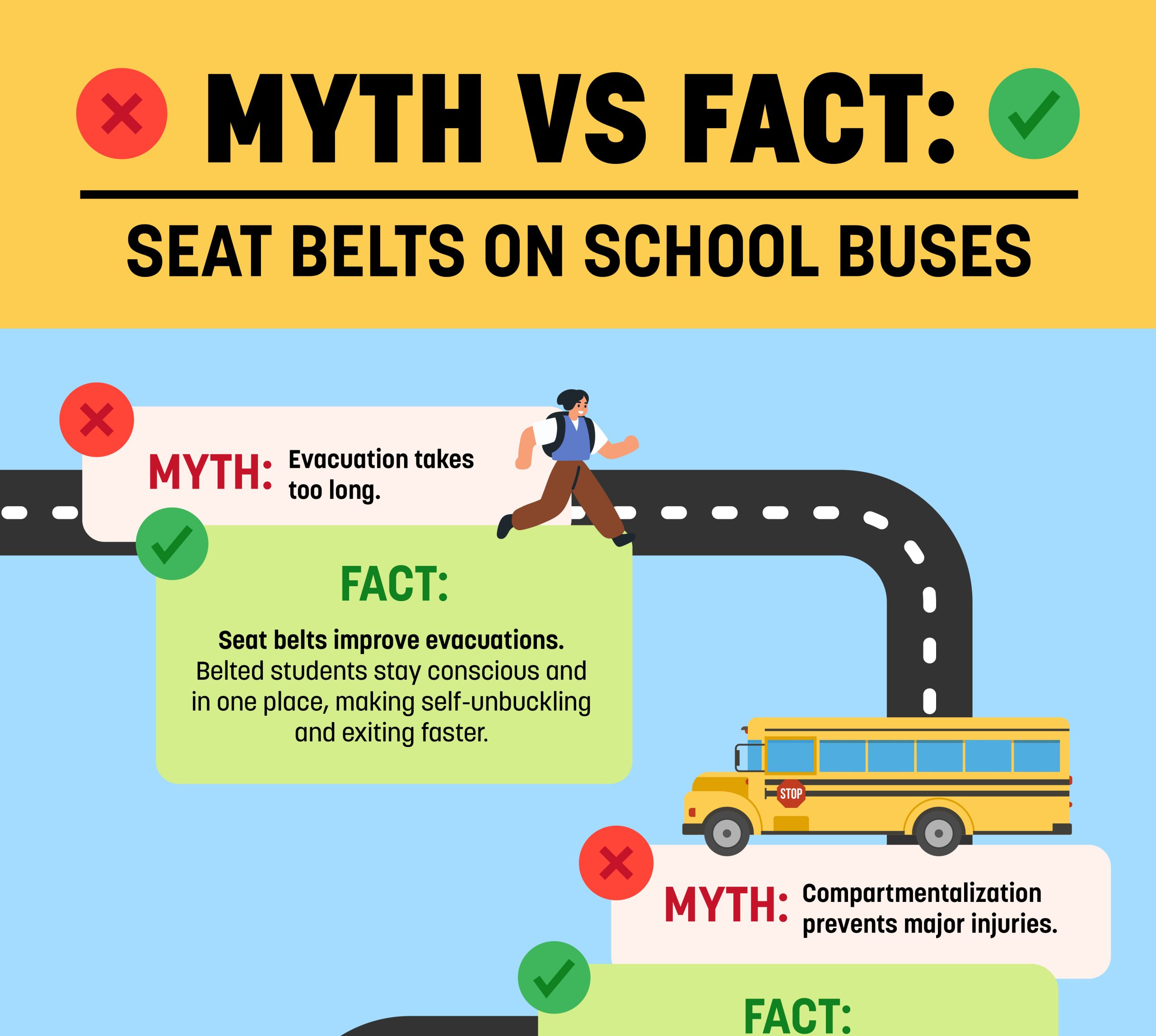
MYTHS vs. FACTS
Seat Belts on School Buses
MYTH:
“Evacuation takes too long.”
FACT:
Seat belts improve evacuations. Belted students stay conscious and in one place,
making self-unbuckling and exiting faster. Unbelted students may be thrown around, injured, or trapped under others in an accident. District drills consistently show safe, efficient
evacuations with lap-shoulder belts.
See how one school district performs evacuation training on a rolled-over bus
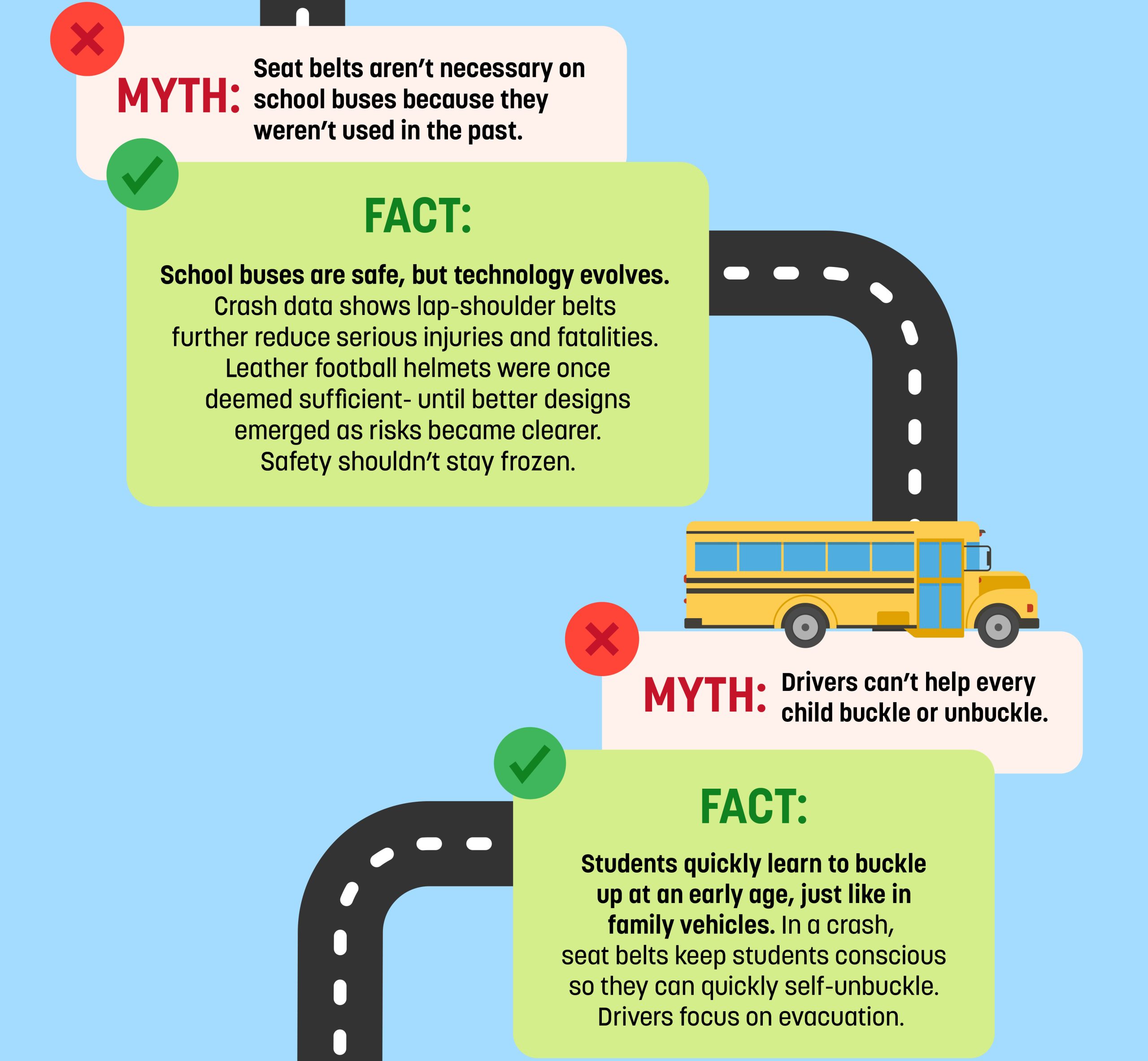
MYTH:
“Drivers can’t help every child buckle or unbuckle.”
FACT:
Students quickly learn to buckle up at an early age, just like in their family vehicles. In a crash, seat belts keep students conscious so they can quickly self-unbuckle. Drivers focus on evacuation. Districts already running these programs report that drills confirm safe, rapid exits.
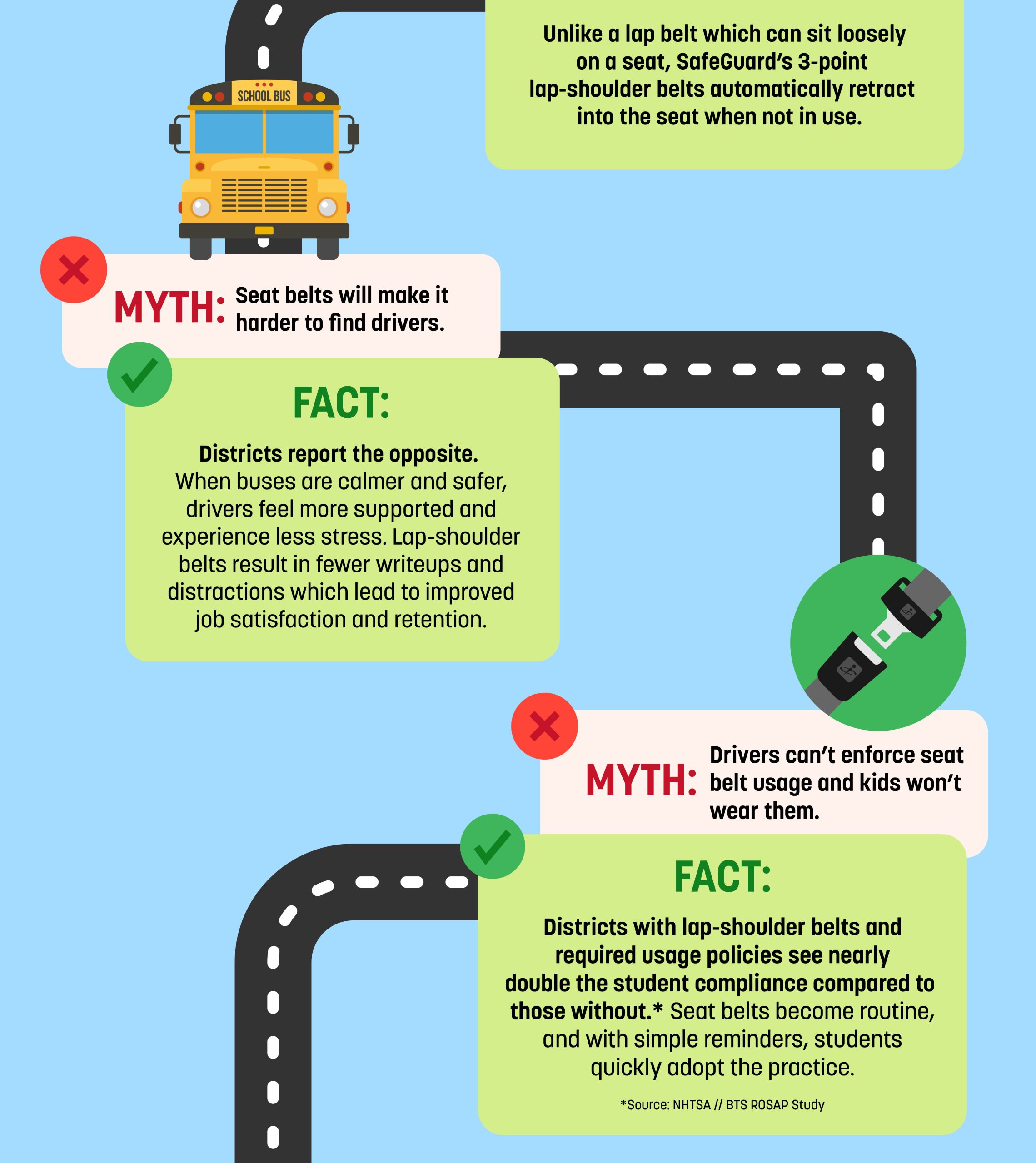
MYTH:
“Seat belts will make it harder to find drivers.”
FACT:
Districts report the opposite. When buses are calmer and safer, drivers feel more supported and experience less stress. Fewer behavior problems mean fewer writeups and distractions
leading to improved job satisfaction and retention. Drivers want to drive safely, and lap-shoulder belts make that easier.
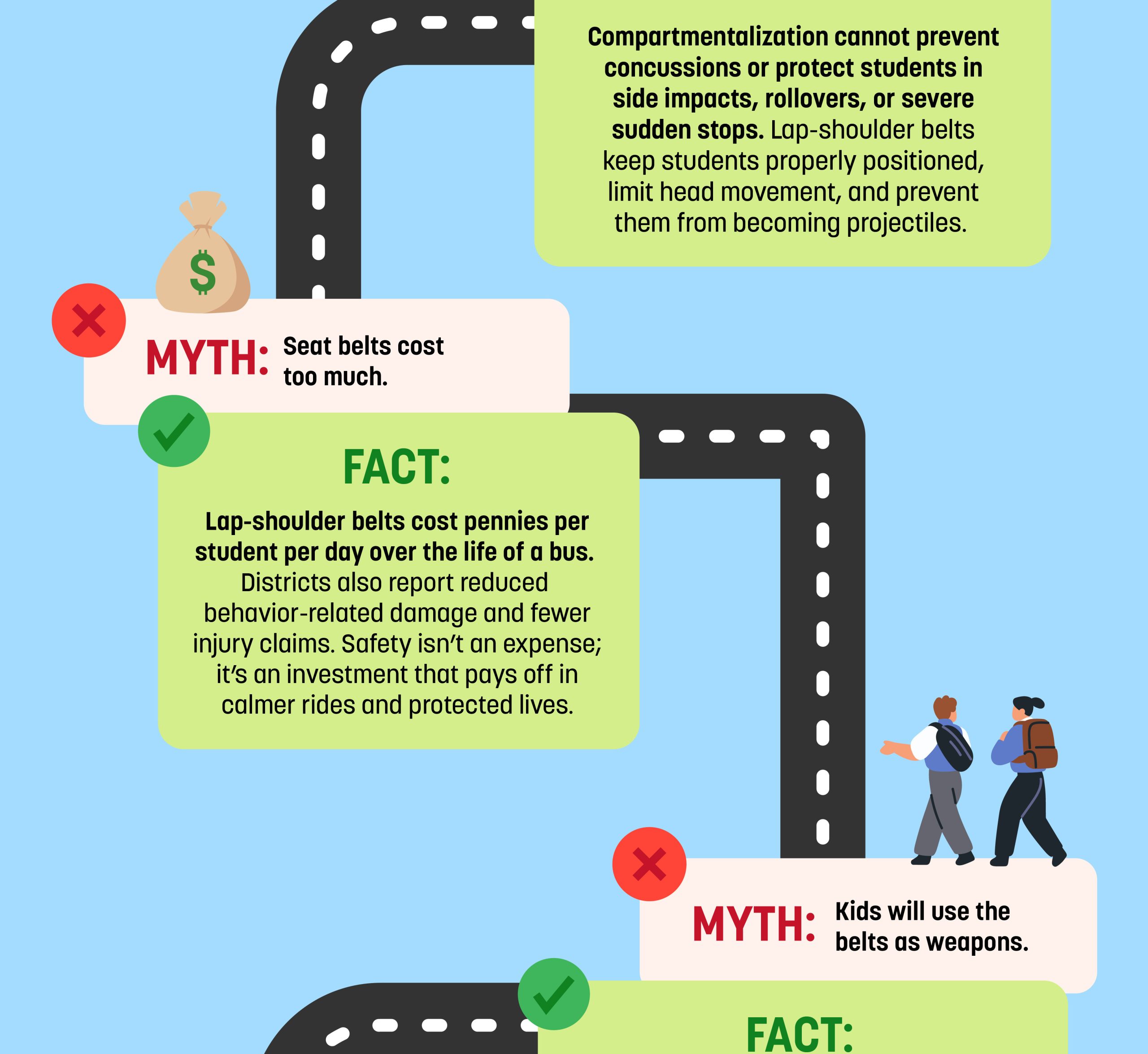
MYTH:
“Compartmentalization prevents major injuries.”
FACT:
Compartmentalization can help in some frontal crashes, but it cannot prevent concussions or protect students in side impacts, rollovers, or severe sudden stops. Today’s data shows that lap-shoulder belts reduce head movement, prevent student to student collisions, and protect a child’s brain, protecting their future.
MYTH:
“We never had seat belts before, they’re not necessary now.”
FACT:
School buses are safe, but technology evolves. Crash data shows lap-shoulder belts further cut serious injuries and fatalities. Leather football helmets were once deemed sufficient—until better designs emerged as risks became clearer. Safety shouldn’t stay frozen. School buses should build on their strong record by embracing innovations that enhance student safety.
MYTH:
“Drivers can’t enforce seat belt usage and kids won’t wear them.”
FACT:
Districts with lap-shoulder belts and required usage policies see nearly double the student compliance compared to those without.* Belts become routine, keeping kids seated and reducing discipline issues. Drivers reinforce expectations like other bus rules—no need to police every click.
MYTH:
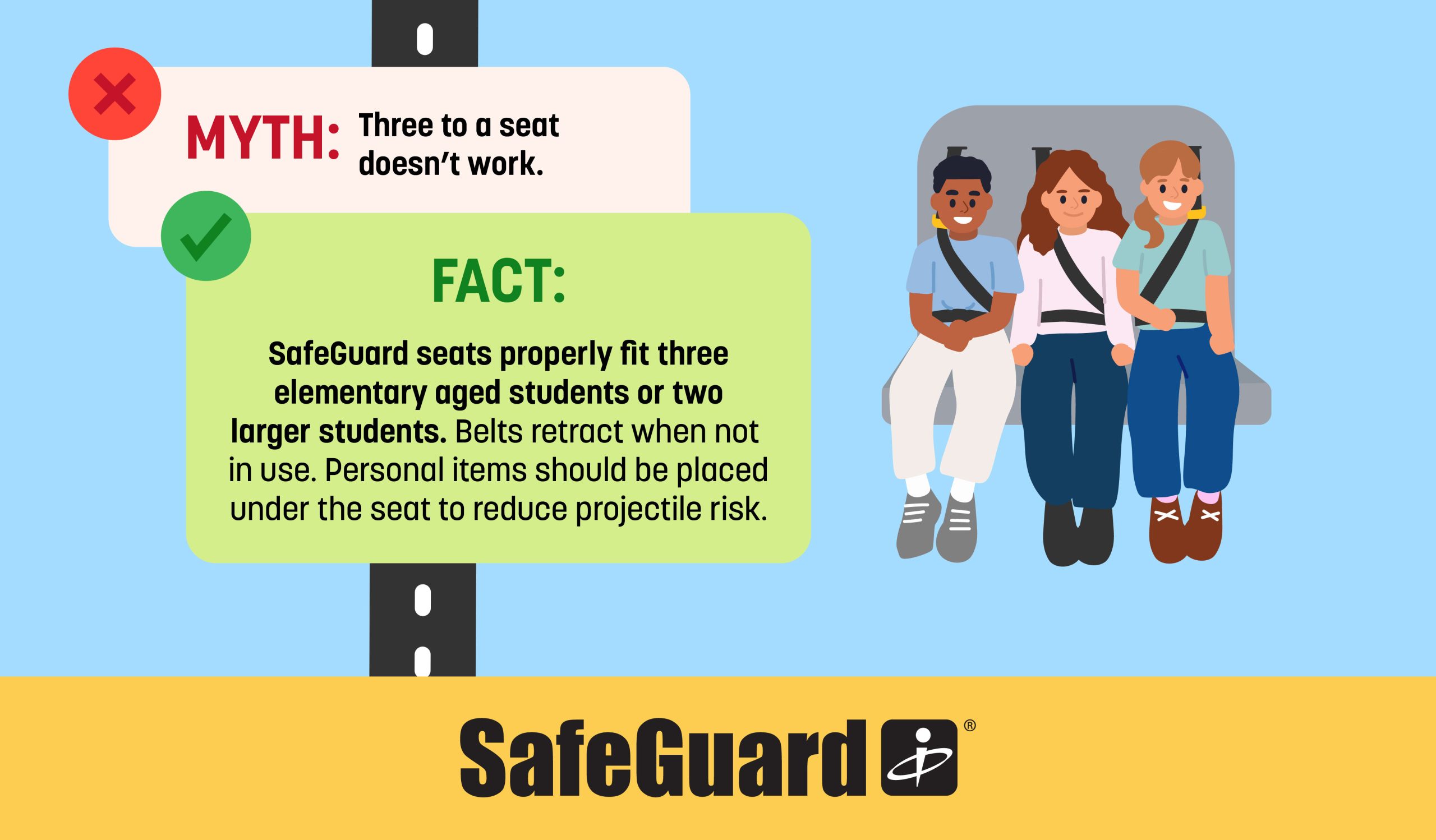
“Three to a seat doesn’t work.”
FACT:
SafeGuard seats properly fit three elementary aged students or two larger students. Belts retract into the seat when not in use. Personal items should be placed under the seat to reduce projectile risk. If older or larger students frequently ride three to a seat, that’s a routing issue, not a seat belt issue.
MYTH:
“Seat belts cost too much.”
FACT:
Lap-shoulder belts cost pennies per student per day over the life of a bus and costs have dropped more than 30% since 2003. Districts also report reduced behavior related damage and fewer injury claims. Safety isn’t an expense; it’s an investment that pays off in calmer rides and protected lives.
MYTH:
“Kids will use the belts as weapons.”
FACT:
Unlike a lap belt which can sit loosely on a seat, SafeGuard’s lap-shoulder seat belts automatically retract into the seat when not in use. Lunch boxes, backpacks, and books make far more convenient and easier to use weapons than lap-shoulder belts.
A better-behaved bus is within your reach. For more information, contact SafeGuard at (877) 447-2305
or email us at safeguard@imminet.com.
MYTHS vs. FACTS
Seat Belts on School Buses
MYTH:
“Evacuation takes too long.”
FACT:
Seat belts improve evacuations. Belted students stay conscious and in one place, making self-unbuckling and exiting faster. Unbelted students may be thrown around, injured, or trapped under others in an accident. District drills consistently show safe, efficient
evacuations with lap-shoulder belts.
See how one school district performs evacuation training on a rolled-over bus
MYTH:
“Drivers can’t help every child buckle or unbuckle.”
FACT:
Students quickly learn to buckle up at an early age, just like in their family vehicles. In a crash, seat belts keep students conscious so they can quickly self-unbuckle. Drivers focus on evacuation. Districts already running these programs report that drills confirm safe, rapid exits.
MYTH:
“Seat belts will make it harder to find drivers.”
FACT:
Districts report the opposite. When buses are calmer and safer, drivers feel more supported and experience less stress. Fewer behavior problems mean fewer writeups and distractions
leading to improved job satisfaction and retention. Drivers want to drive safely, and lap-shoulder belts make that easier.
MYTH:
“Compart-mentalization prevents major injuries.”
FACT:
Compartmentalization can help in some frontal crashes, but it cannot prevent concussions or protect students in side impacts, rollovers, or severe sudden stops. Today’s data shows that lap-shoulder belts reduce head movement, prevent student to student collisions, and protect a child’s brain, protecting their future.
MYTH:
“We never had seat belts before, they’re not necessary now.”
FACT:
School buses are safe, but technology evolves. Crash data shows lap-shoulder belts further cut serious injuries and fatalities. Leather football helmets were once deemed sufficient—until better designs emerged as risks became clearer. Safety shouldn’t stay frozen. School buses should build on their strong record by embracing innovations that enhance student safety.
MYTH:
“Drivers can’t enforce seat belt usage and kids won’t wear them.”
FACT:
Districts with lap-shoulder belts and required usage policies see nearly double the student compliance compared to those without.* Belts become routine, keeping kids seated and reducing discipline issues. Drivers reinforce expectations like other bus rules—no need to police every click.
MYTH:
“Three to a seat doesn’t work.”
FACT:
SafeGuard seats properly fit three elementary aged students or two larger students. Belts retract into the seat when not in use. Personal items should be placed under the seat to reduce projectile risk. If older or larger students frequently ride three to a seat, that’s a routing issue, not a seat belt issue.
MYTH:
“Seat belts cost too much.”
FACT:
Lap-shoulder belts cost pennies per student per day over the life of a bus and costs have dropped more than 30% since 2003. Districts also report reduced behavior related damage and fewer injury claims. Safety isn’t an expense; it’s an investment that pays off in calmer rides and protected lives.
MYTH:
“Kids will use the belts as weapons.”
FACT:
Unlike a lap belt which can sit loosely on a seat, SafeGuard’s lap-shoulder seat belts automatically retract
into the seat when not in use. Lunch boxes, backpacks, and books make far more convenient and easier to use weapons than lap –shoulder belts.
A better-behaved bus is within your reach. For more information, contact SafeGuard at (877) 447-2305
or email us at safeguard@imminet.com.